Datenschutz
Datenschutzerklärung
Entwurf für die öffentliche Website, vor dem Start rechtlich zu prüfen. Die Anmeldung zur Alpha ist auf dieser Seite noch nicht freigeschaltet; bis dahin sendet sie weder Anmeldungen noch Messdaten. Die Schrift Nunito wird mit der Seite ausgeliefert, Google Fonts wird nicht geladen.
Diese Erklärung hat zwei Teile. Teil A gilt für Lenguami, also diese Website, die Anmeldung zur Alpha und die App. Dafür bin ich privat verantwortlich. Teil B gilt für die Begleitstudie der Universität Münster, und nur, wenn du daran teilnimmst.
Teil A: Lenguami
A1. Verantwortlicher
Dr. Timo Strohmann
c/o University of Münster
European Research Center for Information Systems (ERCIS)
Leonardo-Campus 3
48149 Münster
Germany
E-Mail: timo@lenguami.org
Lenguami ist ein privates Projekt und kein Angebot der Universität Münster. Die Anschrift ist nur meine Postanschrift.
A2. Überblick
Diese Website stellt Lenguami vor und sammelt Anmeldungen für die Alpha. Wenn du zustimmst, zähle ich, welche Teile der Seite genutzt werden, ohne Cookies und ohne Profile (A4). Werbe- oder Trackingdienste von Dritten setze ich nicht ein, und ich verkaufe keine Daten.
Wo deine Daten liegen: Die Website wird über Cloudflare ausgeliefert, einen Anbieter aus den USA (A3). Anmeldungen und Zählungen speichere ich bei Supabase auf Servern in Frankfurt am Main (A4, A5). E-Mails verschickt Lettermint aus den Niederlanden (A6). Was mit Daten aus der App passiert, steht in A10.
Entscheidungen, die allein automatisiert über dich getroffen werden (Art. 22 DSGVO), gibt es nicht.
Lenguami wird von einer Studie der Universität Münster begleitet. Daten fließen nur mit deiner ausdrücklichen Zustimmung hinein; Einzelheiten in Teil B.
A3. Aufruf der Website
Wenn du die Website aufrufst, übermittelt dein Browser technisch nötige Daten: IP-Adresse, Zeitpunkt, aufgerufene Adresse, die Website, von der du kommst, sowie Angaben zu Browser und Betriebssystem. Sie sind nötig, um dir die Seite auszuliefern und sie vor Angriffen und Missbrauch zu schützen. Rechtsgrundlage ist mein berechtigtes Interesse an einer sicheren, funktionierenden Website (Art. 6 Abs. 1 lit. f DSGVO).
Die Website liegt bei Cloudflare Pages. Anbieter ist die Cloudflare, Inc., 101 Townsend St., San Francisco, CA 94107, USA. Cloudflare arbeitet als Auftragsverarbeiter (Art. 28 DSGVO); der Vertrag dazu ist Teil der Nutzungsbedingungen von Cloudflare. Cloudflare beantwortet Anfragen aus einem weltweiten Netz von Rechenzentren, in der Regel aus einem in deiner Nähe, und verarbeitet die Daten in der EU und in den USA. Für die Übermittlung in die USA ist Cloudflare nach dem EU-US Data Privacy Framework zertifiziert (Angemessenheitsbeschluss der EU-Kommission, Art. 45 DSGVO); zusätzlich gelten Standardvertragsklauseln (Art. 46 Abs. 2 lit. c DSGVO).
Cloudflare bewahrt diese Daten nur so lange auf, wie es für Betrieb und Sicherheit nötig ist; eine feste Frist nennt Cloudflare dafür nicht. Ich selbst werte keine Zugriffsprotokolle mit IP-Adressen aus und sehe nur Summen wie die Zahl der Aufrufe. Cookies setze ich keine; Funktionen von Cloudflare, die Cookies setzen oder Besuche messen, sind ausgeschaltet.
A4. Zählung mit deiner Zustimmung
Beim ersten Besuch fragt die Seite, ob sie zählen darf, was angeklickt wird. „Ja“ und „Nein“ sind gleichwertig. Solange du nicht zustimmst, schickt die Seite keine solchen Meldungen.
Wenn du zustimmst, schickt die Seite beim Aufruf und bei einzelnen Klicks eine kurze Meldung an meinen Server: welcher Teil der Seite angesehen oder welche Schaltfläche geklickt wurde, in welcher Sprache die Seite angezeigt wird und, beim ersten Aufruf, von welcher Website du kommst (nur deren Domain) sowie Kampagnenangaben aus dem Link (utm-Parameter), falls vorhanden. Dazu kommt eine zufällige Besuchskennung, die nur im Arbeitsspeicher liegt und beim Neuladen oder Schließen der Seite verfällt. So kann ich Klicks innerhalb eines Besuchs zusammenzählen, aber keine Besuche über Tage hinweg verbinden.
Ich setze dafür keine Cookies und speichere weder deine IP-Adresse noch die Kennung deines Browsers (User-Agent). Aus ihr leitet der Server nur ab, ob es ein Handy, Tablet, Computer oder ein automatisches Programm ist. Was du in Formulare eingibst, wird nicht gezählt, auch nicht der Name, den du deinem Companion gibst. Die Meldungen werden nicht mit deiner Anmeldung zur Alpha verbunden.
Zweck ist, die Seite verständlicher zu machen, etwa zu sehen, ob die Anleitung zur Alpha gelesen wird. Rechtsgrundlage ist deine Einwilligung (§ 25 Abs. 1 TDDDG, Art. 6 Abs. 1 lit. a DSGVO). Die Meldungen werden bei Supabase auf Servern in Frankfurt am Main verarbeitet (A5) und nach 400 Tagen gelöscht; ausgewertet werden nur Summen.
Du kannst deine Einwilligung jederzeit mit dem Schalter unten widerrufen oder erteilen. Deine Wahl merkt sich dein Browser (A8). Sendet dein Browser das Signal „Global Privacy Control“, zählt die Seite nichts und fragt auch nicht.
A5. Anmeldung zur Alpha
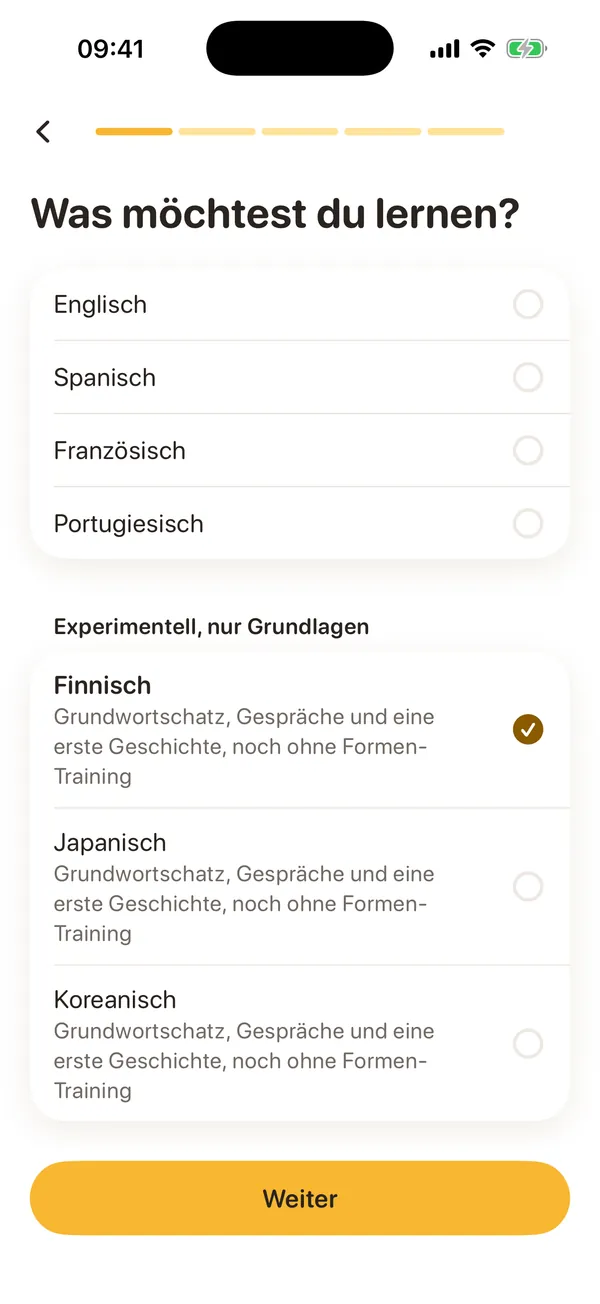
Wenn du dich für die Alpha einträgst, verarbeite ich deine E-Mail-Adresse, auf Wunsch den Namen, mit dem ich dich ansprechen soll, deine Ausgangssprache, die Sprachen, die du lernen möchtest, auf Wunsch weitere Sprachen, die dich interessieren, und den Anlass, ob du ein iPhone hast, ob ich dich zu einem Gespräch einladen darf, die Sprache der Seite, den Zeitpunkt, deine Einwilligungen und deine Bestätigung, dass du mindestens 18 Jahre alt bist. Außerdem speichere ich, von welcher Website oder Kampagne du gekommen bist (nur Domain und utm-Angaben).
Zweck ist, dich zur Alpha einzuladen und die Plätze auf die Sprachen zu verteilen. Rechtsgrundlage ist deine Einwilligung (Art. 6 Abs. 1 lit. a DSGVO). Du kannst sie jederzeit mit Wirkung für die Zukunft widerrufen, zum Beispiel per E-Mail. Die Angaben sind freiwillig; ohne E-Mail-Adresse kann ich dich aber nicht einladen.
Nach der Anmeldung bekommst du eine E-Mail mit einem Bestätigungslink. Erst wenn du bestätigst, kommst du auf die Liste. Bestätigst du nicht innerhalb von sieben Tagen, lösche ich die Anmeldung samt deinen Angaben und Antworten.
Wenn ein Platz frei ist, schicke ich dir eine Einladung mit dem Link zu TestFlight und einem persönlichen Code. Mit dem Code verbindet die App dein Konto mit deiner Anmeldung. Weitere E-Mails bekommst du nur zur Alpha (A6).
Um Missbrauch zu verhindern, zählt der Server Anmeldungen je Verbindung und Stunde. Die IP-Adresse geht dabei nur als täglich wechselnder Prüfwert ein und wird nicht gespeichert; die Zähler werden nach zwei Tagen gelöscht.
Gespeichert wird bei Supabase auf Servern in Frankfurt am Main, als Auftragsverarbeiter nach Art. 28 DSGVO. Vertragspartner ist Supabase Pte. Ltd. (Singapur). Für Betrieb und Support können Mitarbeitende von Supabase auch aus Ländern außerhalb der EU zugreifen; dafür gelten die Standardvertragsklauseln der EU-Kommission (Art. 46 Abs. 2 lit. c DSGVO). Die Liste sehe nur ich. Ich lösche die Daten nach dem Ende der Alpha, spätestens [Frist, Vorschlag: sechs Monate nach ihrem Ende], oder früher, wenn du widerrufst.
Füllst du bei der Anmeldung den Fragebogen aus, gehören deine Antworten zur Studie (Teil B). Sie werden getrennt von deiner E-Mail-Adresse unter einer Studien-ID gespeichert.
A6. E-Mails zur Alpha
Die E-Mails zur Alpha verschicke ich über Lettermint: die Bestätigung deiner Anmeldung, die Einladung, Erinnerungen an die Fragebögen, wenn du an der Studie teilnimmst (Teil B), den Dank zum Abschluss und die Bestätigung, wenn du dein Konto löschst. Anbieter ist die Lettermint B.V., Willemsvaart 16 B, 8019 AB Zwolle, Niederlande, als Auftragsverarbeiter (Art. 28 DSGVO).
Lettermint verarbeitet deine E-Mail-Adresse, den Namen, mit dem ich dich anspreche, und den Inhalt der E-Mail nur in der EU und bewahrt Inhalt und Versandprotokoll 28 Tage auf. Die Zählung von Öffnungen und Klicks ist abgeschaltet; die E-Mails enthalten keine Zählpixel und keine umgeleiteten Links. Ich sehe nur, ob eine E-Mail zugestellt wurde. Rechtsgrundlage ist deine Einwilligung aus der Anmeldung (Art. 6 Abs. 1 lit. a DSGVO). Newsletter oder Werbung bekommst du nicht. Erinnerungen und den Dank zum Abschluss kannst du mit dem Link am Ende dieser E-Mails abbestellen.
A7. Wenn du mir schreibst
Schreibst du mir eine E-Mail, verarbeite ich deine Adresse und deine Nachricht, um dir zu antworten. Rechtsgrundlage ist mein berechtigtes Interesse, Anfragen zu beantworten (Art. 6 Abs. 1 lit. f DSGVO). Das Postfach liegt bei der STRATO GmbH, Otto-Ostrowski-Straße 7, 10249 Berlin, auf Servern in Deutschland. Ich lösche die Nachrichten, wenn die Sache erledigt ist, spätestens [Frist, Vorschlag: zwei Jahre nach der letzten Nachricht].
A8. Einstellungen in deinem Browser
Die Seite merkt sich im Speicher deines Browsers (localStorage), ob du sie auf Deutsch oder Englisch lesen möchtest und ob du der Zählung zugestimmt hast oder nicht. Beide Angaben verlassen dein Gerät nicht. Sie sind nötig, damit die Seite so erscheint und sich so verhält, wie du es gewählt hast, und dich nicht bei jedem Besuch neu fragt (§ 25 Abs. 2 Nr. 2 TDDDG). Du kannst sie in deinem Browser jederzeit löschen.
A9. Schriften
Die Schrift Nunito wird von diesem Server geladen. Dabei wird keine Verbindung zu Google oder anderen Dritten hergestellt.
A10. Die App
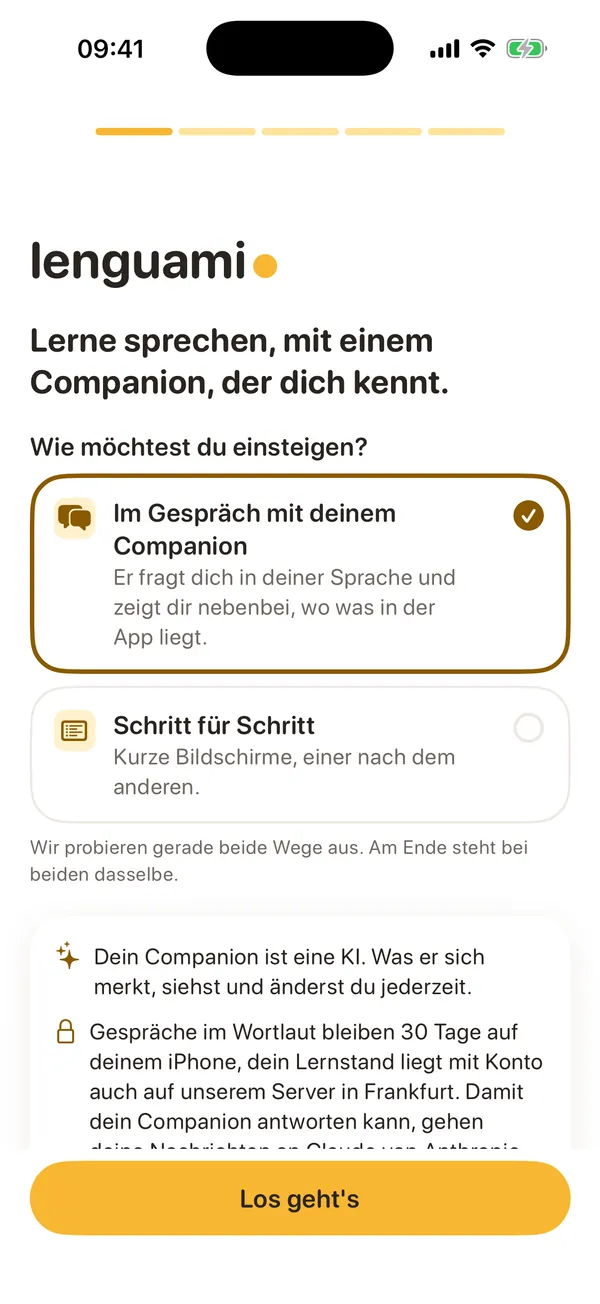
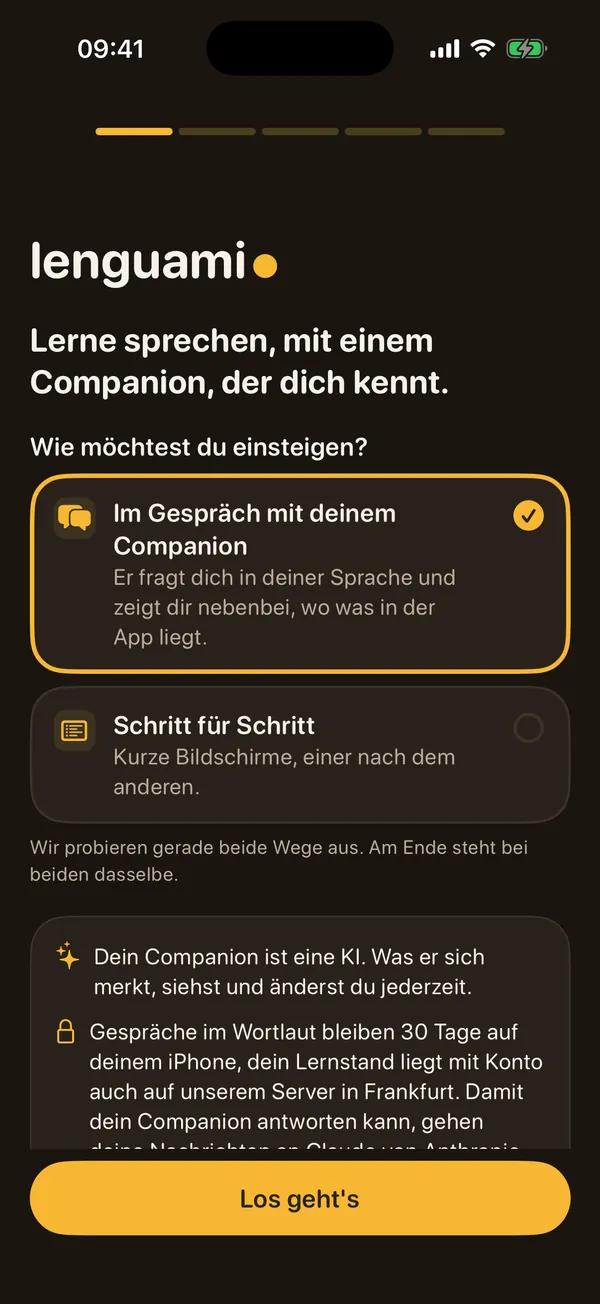
Für die App Lenguami gilt eine eigene Datenschutzerklärung. Du siehst sie, bevor du die App zum ersten Mal nutzt. Kurz vorab, wohin Daten aus der App gehen:
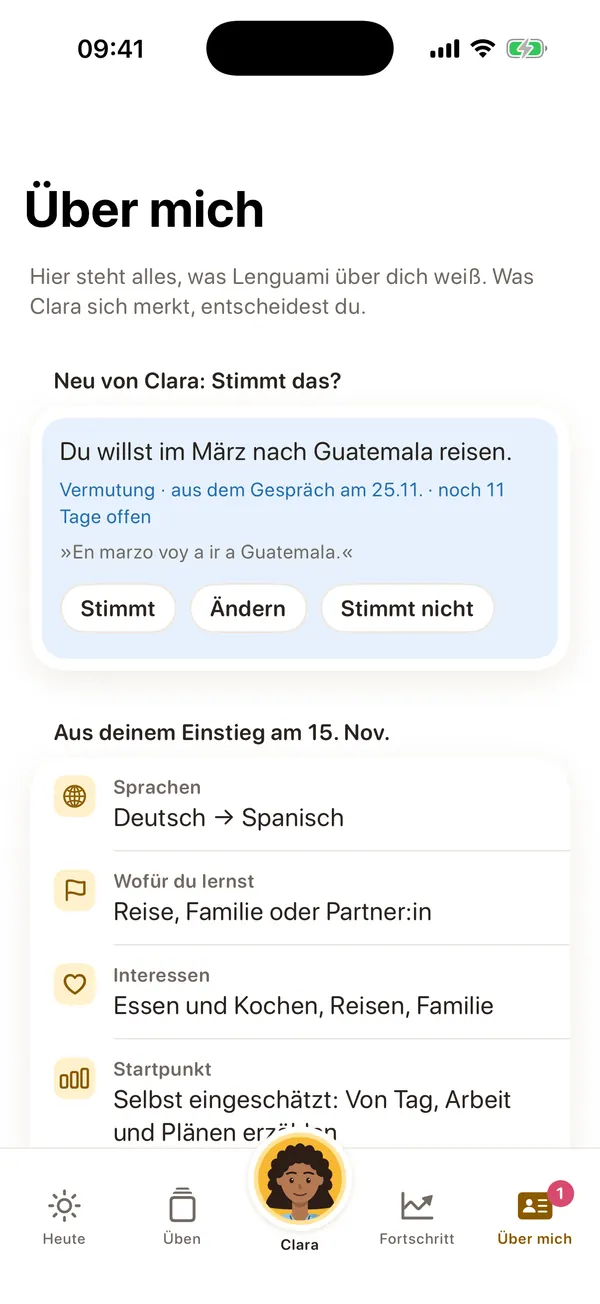
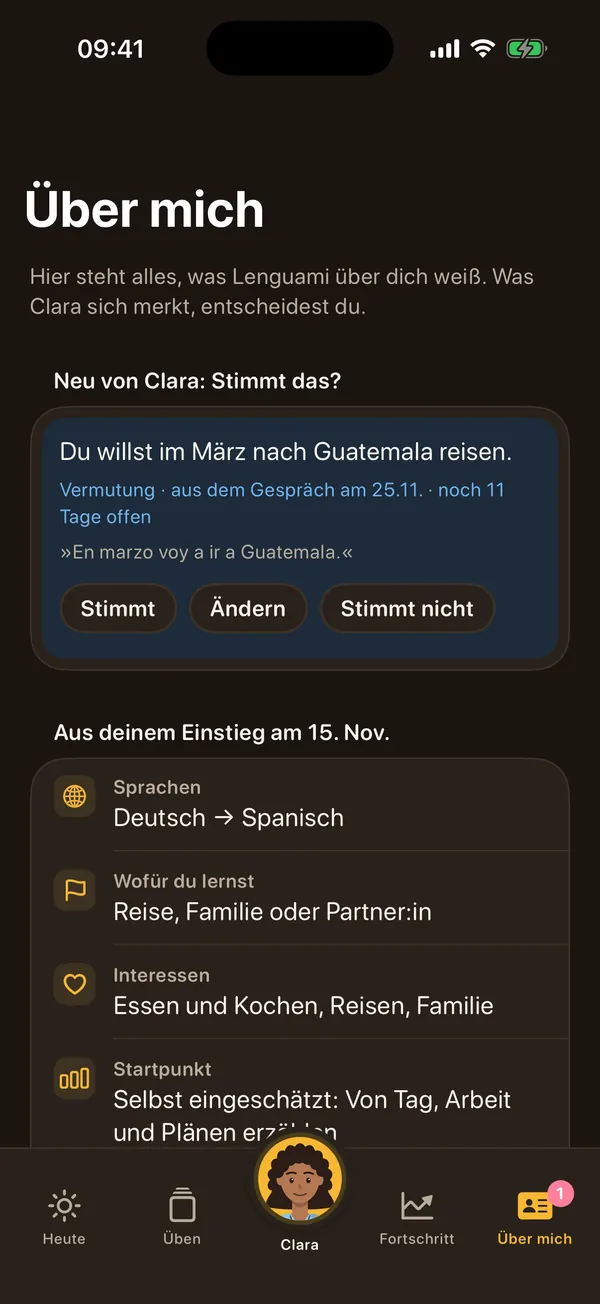
- Dein Lernstand und das, was du deinem Companion ausdrücklich zum Merken freigibst, liegen bei Supabase in Frankfurt am Main. Gespräche im Wortlaut bleiben 30 Tage auf deinem iPhone.
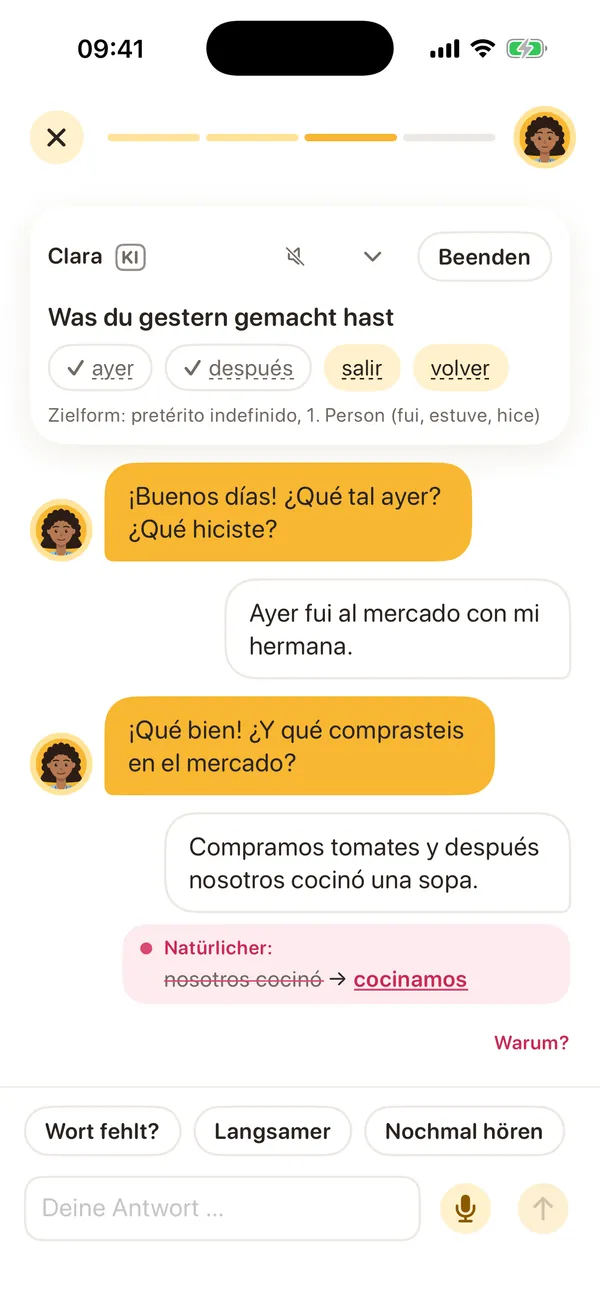
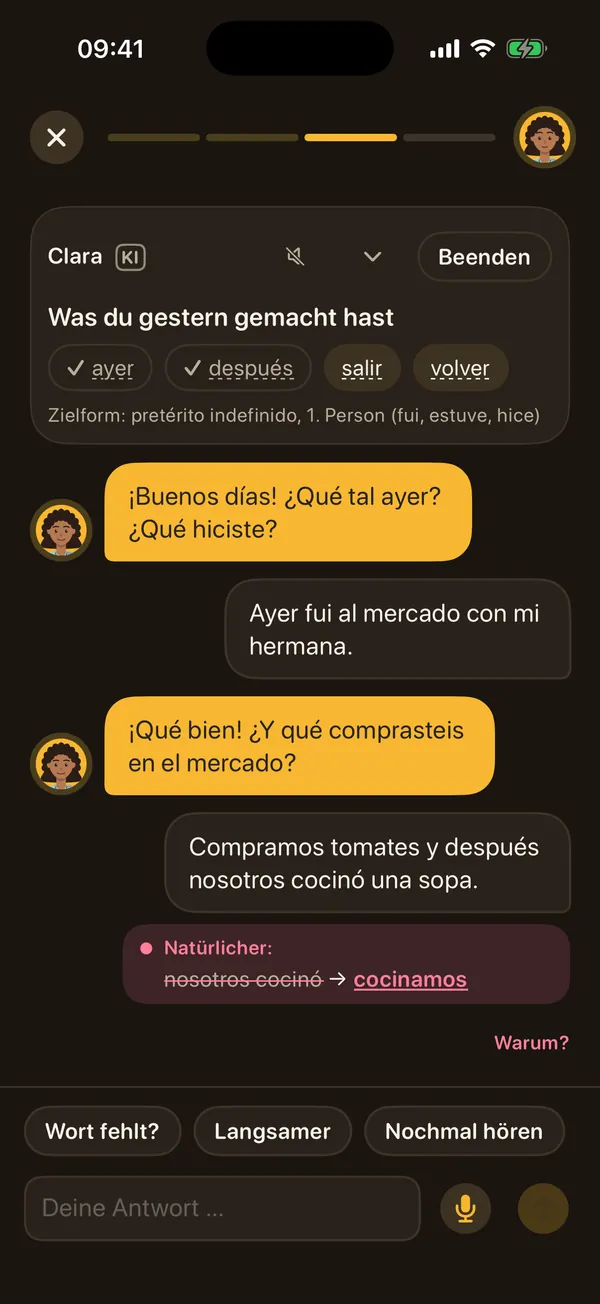
- Damit dein Companion antworten kann, gehen deine Nachrichten im Gespräch an Claude, ein Sprachmodell von Anthropic (Vertragspartner Anthropic Ireland, Limited). Anthropic verarbeitet sie in meinem Auftrag außerhalb der EU, vor allem in den USA, auf Grundlage von Standardvertragsklauseln, nutzt sie nicht zum Training und löscht sie in der Regel nach 30 Tagen. Bevor zum ersten Mal etwas an Anthropic geht, fragt dich die App.
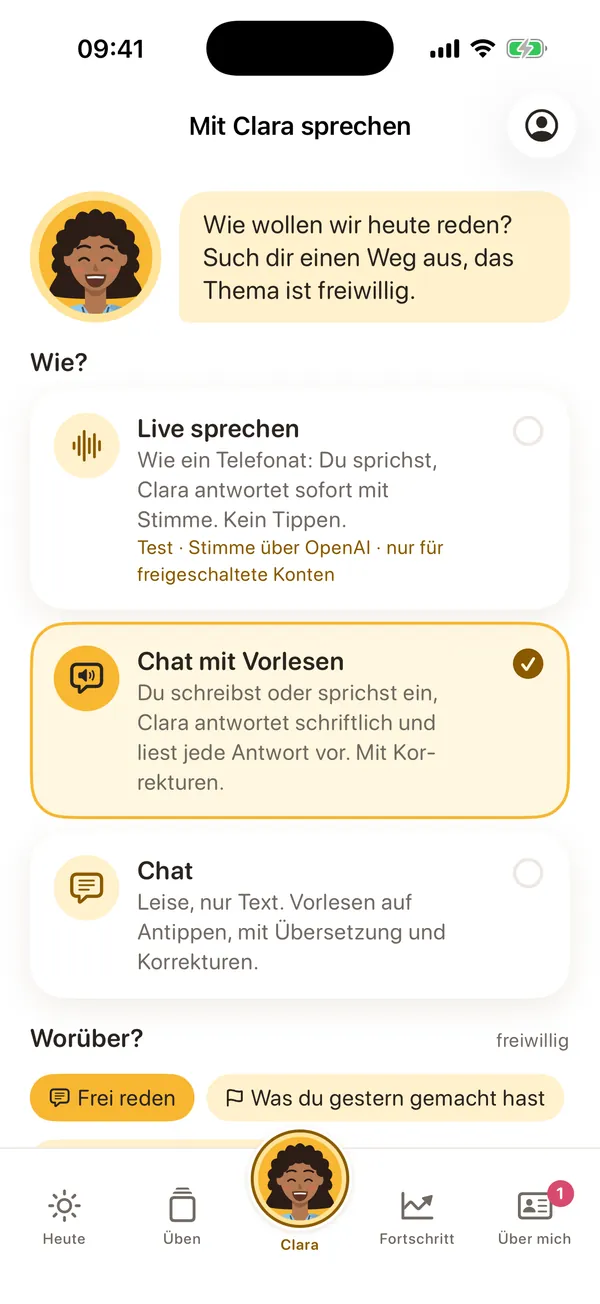
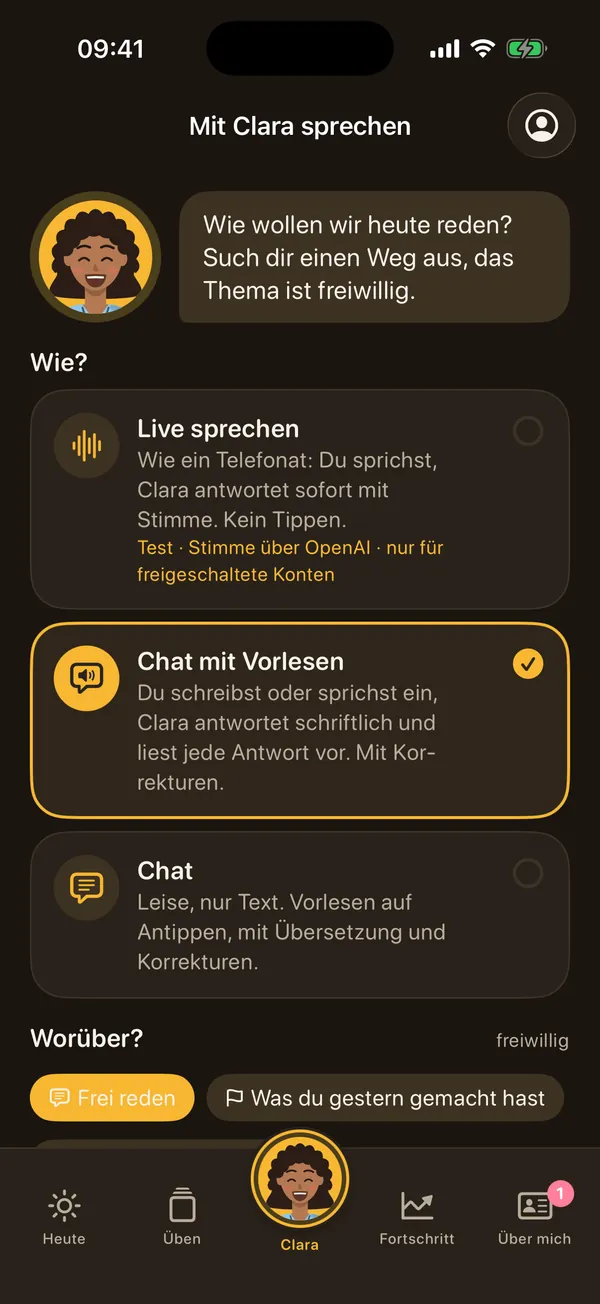
- Das Live-Gespräch ist bisher ein Test für einzelne freigeschaltete Konten. Dort geht deine Stimme an ein Sprachmodell von OpenAI (Vertragspartner OpenAI Ireland Ltd), das sie in meinem Auftrag in den USA verarbeitet, auf Grundlage von Standardvertragsklauseln, nicht zum Training nutzt und in der Regel nach 30 Tagen löscht. Die App sagt dir das, bevor es losgeht.
- Für TestFlight und die Anmeldung mit Apple ist Apple selbst verantwortlich; dafür gilt Apples Datenschutzrichtlinie.
A11. Deine Rechte
Du hast das Recht auf Auskunft (Art. 15 DSGVO), Berichtigung (Art. 16), Löschung (Art. 17), Einschränkung der Verarbeitung (Art. 18) und Datenübertragbarkeit (Art. 20). Eine Einwilligung kannst du jederzeit mit Wirkung für die Zukunft widerrufen (Art. 7 Abs. 3). Schreib mir dazu einfach eine E-Mail.
Widerspruch: Soweit ich Daten auf Grundlage meines berechtigten Interesses verarbeite (A3, A7), kannst du aus Gründen, die sich aus deiner besonderen Situation ergeben, jederzeit widersprechen (Art. 21 Abs. 1 DSGVO).
Außerdem kannst du dich bei einer Datenschutz-Aufsichtsbehörde beschweren (Art. 77 DSGVO), zum Beispiel bei der Behörde des Bundeslands, in dem du wohnst.
A12. Änderungen
Ich passe diese Erklärung an, wenn sich etwas ändert, etwa ein Dienst, den ich nutze. Es gilt die Fassung auf dieser Seite.
Teil B: Begleitstudie der Universität Münster
Dieser Teil gilt nur, wenn du an der Begleitforschung teilnimmst.
B1. Verantwortlich
Universität Münster, vertreten durch die Rektorin oder den Rektor
Schlossplatz 2, 48149 Münster
Studienleitung: Dr. Timo Strohmann, European Research Center for Information Systems (ERCIS), Leonardo-Campus 3, 48149 Münster, [dienstliche E-Mail-Adresse oder timo@lenguami.org]
Datenschutz an der Universität: Stabsstelle Datenschutz, Schlossplatz 2, 48149 Münster, datenschutz@uni-muenster.de
[Mit der Stabsstelle Datenschutz abstimmen: Votum der Ethikkommission, Vertrag zur Auftragsverarbeitung oder gemeinsame Verantwortung, Speicherfrist]
B2. Wann die Studie beginnt
Die Studie beginnt erst, wenn die Ethikkommission zugestimmt hat. Bis dahin entfällt der Fragebogen bei der Anmeldung, und es werden weder Antworten noch Nutzungsdaten für die Studie gespeichert. Einwilligungen, die du vorher gibst, gelten ab dem Beginn der Studie.
B3. Was erhoben wird
Du kannst zwei Dinge erlauben, beide freiwillig und unabhängig voneinander. Ohne diese Einwilligungen kommst du genauso in die Alpha.
Fragebögen. Bei der Anmeldung beantwortest du etwa fünf Minuten lang Fragen: zu dir (zum Beispiel Alter und Sprachen), zu deinen bisherigen Erfahrungen mit Sprachenlernen, Apps, KI und KI-Companions und, wenn du möchtest, drei persönlichere Fragen dazu, wie oft du dich einsam fühlst. Jede Frage außer der Zielsprache kannst du überspringen. Während der Alpha stelle ich dir in der App weitere Fragen: ab und zu eine kurze Frage nach einer Übung und längere Fragebögen nach etwa vier und acht Wochen. An die längeren Fragebögen erinnere ich dich per E-Mail über Lettermint (A6).
Interviews. Bei der Anmeldung kannst du außerdem ankreuzen, dass ich dich per E-Mail zu einem Gespräch zu zweit einladen darf. Dieses Häkchen gehört zu deiner Anmeldung (A5), nicht zur Studien-ID. Ob du mitmachst, entscheidest du, wenn die Einladung kommt; was dabei aufgezeichnet wird und wie lange, erfährst du vorher.
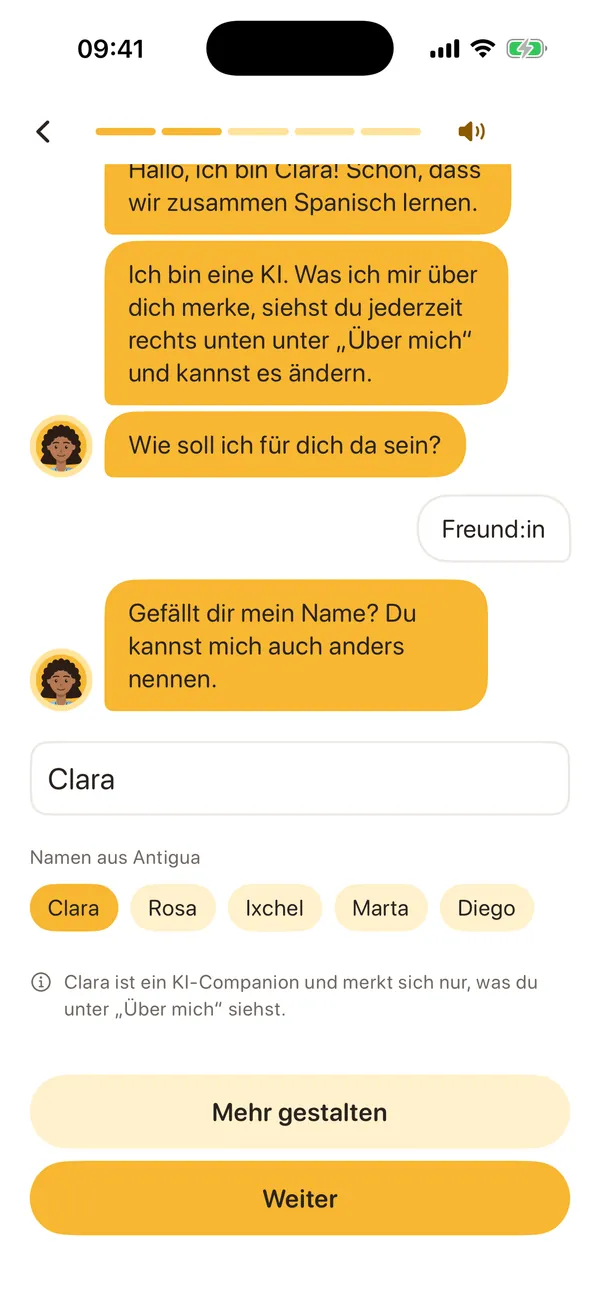
Nutzungsdaten. Die App zeichnet auf, wie du sie nutzt, zum Beispiel welche Übungen du machst, wie lange und mit welchem Ergebnis. Texte, die du schreibst oder sprichst, Texte deines Companions, sein Gedächtnis und Namen gehören nicht dazu.
B4. Studien-ID
Beides liegt unter einer Studien-ID, getrennt von deiner E-Mail-Adresse. Die Zuordnung zwischen Studien-ID und Anmeldung dient dazu, deine Antworten mit deiner Nutzung der App zusammenzuführen und deine Daten auf Wunsch zu löschen.
Ich habe dabei zwei Rollen: Ich betreibe Lenguami und leite die Studie. Als Betreiber könnte ich die Zuordnung technisch einsehen. Ausgewertet wird deshalb nur aus Daten ohne Namen und E-Mail-Adresse. Weil die Alpha klein ist, erkenne ich Teilnehmende trotzdem manchmal.
Die Daten entstehen in der App und auf meinem Server bei Supabase in Frankfurt am Main. Ich verarbeite sie dort im Auftrag der Universität. [Vertrag nach Art. 28 DSGVO mit der Universität, Supabase als Unterauftragsverarbeiter; oder was die Stabsstelle Datenschutz stattdessen festlegt]
B5. Zweck und Rechtsgrundlage
Zweck ist die wissenschaftliche Begleitung der Alpha: zu verstehen, mit welchen Erfahrungen Menschen starten und was beim Lernen hilft. Rechtsgrundlage ist deine Einwilligung (Art. 6 Abs. 1 lit. a DSGVO; für die Fragen zur Einsamkeit, soweit sie als besonders schützenswert gelten, Art. 9 Abs. 2 lit. a DSGVO), mit Garantien nach Art. 89 DSGVO und dem Datenschutzgesetz Nordrhein-Westfalen. Ergebnisse werden nur zusammengefasst veröffentlicht, sodass niemand erkennbar ist.
B6. Widerruf und Fristen
Du kannst jede Einwilligung jederzeit in der App oder per E-Mail widerrufen und dabei wählen, ob die bis dahin erhobenen Daten gelöscht werden. [Studienbeschreibung und Speicherfrist ergänzen; Vorschlag aus dem Datenschutz-Dokument: Rohdaten spätestens drei Jahre nach Studienende löschen, danach nur anonymisierte Datensätze]
B7. Deine Rechte
Die Rechte aus A11 hast du auch hier. Du kannst sie bei der Studienleitung oder bei der Stabsstelle Datenschutz der Universität Münster geltend machen (B1). Zuständige Aufsichtsbehörde ist die Landesbeauftragte für Datenschutz und Informationsfreiheit Nordrhein-Westfalen, Postfach 20 04 44, 40102 Düsseldorf, poststelle@ldi.nrw.de.
Stand: [Datum der Veröffentlichung]
Privacy
Privacy policy
Draft for the public website, to be reviewed legally before launch. Sign-up for the alpha is not yet enabled on this page; until then it sends neither sign-ups nor analytics. The Nunito font is served with the page; Google Fonts is not loaded.
If the German and English versions differ, the German version applies.
This policy has two parts. Part A covers Lenguami: this website, the alpha sign-up and the app. I am personally responsible for it as a private individual. Part B covers the accompanying study by the University of Münster, and only applies if you take part.
Part A: Lenguami
A1. Controller
Dr. Timo Strohmann
c/o University of Münster
European Research Center for Information Systems (ERCIS)
Leonardo-Campus 3
48149 Münster
Germany
Email: timo@lenguami.org
Lenguami is a private project and not an offering of the University of Münster. The address is only my postal address.
A2. Overview
This website introduces Lenguami and collects sign-ups for the alpha. If you agree, I count which parts of the page are used, without cookies and without profiles (A4). I do not use advertising or third-party tracking services, and I do not sell data.
Where your data is kept: the website is delivered through Cloudflare, a US provider (A3). Sign-ups and counts are stored with Supabase on servers in Frankfurt am Main, Germany (A4, A5). Emails are sent by Lettermint from the Netherlands (A6). What happens to data from the app is described in A10.
There are no decisions about you based solely on automated processing (Art. 22 GDPR).
Lenguami is accompanied by a study of the University of Münster. Data only goes into it with your explicit consent; details in Part B.
A3. Visiting the website
When you visit the website, your browser sends data that is technically necessary: IP address, time, the address requested, the website you came from, and information about your browser and operating system. This is needed to deliver the page to you and to protect it against attacks and misuse. The legal basis is my legitimate interest in a secure, working website (Art. 6(1)(f) GDPR).
The website is hosted on Cloudflare Pages. The provider is Cloudflare, Inc., 101 Townsend St., San Francisco, CA 94107, USA. Cloudflare acts as a processor (Art. 28 GDPR); the data processing agreement is part of Cloudflare's terms. Cloudflare answers requests from a worldwide network of data centres, usually one near you, and processes the data in the EU and in the US. For transfers to the US, Cloudflare is certified under the EU-US Data Privacy Framework (adequacy decision of the European Commission, Art. 45 GDPR); Standard Contractual Clauses apply in addition (Art. 46(2)(c) GDPR).
Cloudflare keeps this data only as long as needed for operation and security; Cloudflare does not state a fixed period for this. I do not analyse access logs with IP addresses myself and only see totals such as the number of visits. I do not set cookies; Cloudflare features that set cookies or measure visits are switched off.
A4. Counting with your consent
On your first visit the page asks whether it may count what is clicked. “Yes” and “No” are equal choices. Until you agree, the page sends no such messages.
If you agree, the page sends a short message to my server when it loads and on certain clicks: which part of the page was viewed or which button was clicked, the language the page is shown in and, on the first visit, which website you came from (its domain only) and campaign information from the link (utm parameters), if any. It also includes a random visit ID that exists only in memory and expires when you reload or close the page. This lets me count clicks within one visit, but not connect visits across days.
I set no cookies for this and store neither your IP address nor your browser's identifier (user agent). From the user agent the server only derives whether the visitor is a phone, tablet, computer or an automated program. What you type into forms is not counted, including the name you give your companion. The messages are not linked to your alpha sign-up.
The purpose is to make the page easier to understand, for example to see whether the alpha guide is read. The legal basis is your consent (§ 25(1) TDDDG, Art. 6(1)(a) GDPR). The messages are processed with Supabase on servers in Frankfurt am Main (A5) and deleted after 400 days; only totals are analysed.
You can withdraw or give your consent at any time with the switch below. Your browser remembers your choice (A8). If your browser sends the “Global Privacy Control” signal, the page counts nothing and does not ask.
A5. Signing up for the alpha
When you sign up for the alpha, I process your email address, optionally the name you'd like me to use, your source language, the languages you want to learn, optionally other languages you're interested in and your reason, whether you have an iPhone, whether I may invite you to a one-to-one conversation, the page language, the time, your consents and your confirmation that you are at least 18 years old. I also store which website or campaign you came from (domain and utm tags only).
The purpose is to invite you to the alpha and to distribute places across languages. The legal basis is your consent (Art. 6(1)(a) GDPR). You can withdraw it at any time with effect for the future, for example by email. Providing this information is voluntary, but without an email address I cannot invite you.
After signing up you get an email with a confirmation link. You are only added to the list once you confirm. If you don't confirm within seven days, I delete the sign-up together with your details and answers.
When a place is free, I send you an invitation with the TestFlight link and a personal code. With the code, the app links your account to your sign-up. You only get other emails about the alpha (A6).
To prevent misuse, the server counts sign-ups per connection and hour. Your IP address is only used as a check value that changes daily and is not stored; the counters are deleted after two days.
The data is stored with Supabase on servers in Frankfurt am Main as a processor under Art. 28 GDPR. The contracting party is Supabase Pte. Ltd. (Singapore). Supabase staff may access data from countries outside the EU for operations and support; the European Commission's Standard Contractual Clauses apply to this (Art. 46(2)(c) GDPR). Only I can see the list. I delete the data after the alpha ends, at the latest [period, suggestion: six months after it ends], or earlier if you withdraw your consent.
If you fill in the questionnaire when signing up, your answers belong to the study (Part B). They are stored under a study ID, separately from your email address.
A6. Emails about the alpha
I send emails about the alpha through Lettermint: confirming your sign-up, the invitation, reminders about the questionnaires if you take part in the study (Part B), a thank-you at the end, and a confirmation if you delete your account. The provider is Lettermint B.V., Willemsvaart 16 B, 8019 AB Zwolle, the Netherlands, acting as a processor (Art. 28 GDPR).
Lettermint processes your email address, the name I use for you and the content of the email only in the EU, and keeps the content and the sending log for 28 days. Open and click tracking is switched off; the emails contain no tracking pixels and no redirected links. I only see whether an email was delivered. The legal basis is the consent you gave when signing up (Art. 6(1)(a) GDPR). You will not get newsletters or advertising. You can stop the reminders and the thank-you at the end with the link at the bottom of those emails.
A7. If you write to me
If you send me an email, I process your address and your message in order to reply. The legal basis is my legitimate interest in answering enquiries (Art. 6(1)(f) GDPR). The mailbox is hosted by STRATO GmbH, Otto-Ostrowski-Straße 7, 10249 Berlin, on servers in Germany. I delete messages once the matter is settled, at the latest [period, suggestion: two years after the last message].
A8. Settings in your browser
The page uses your browser's storage (localStorage) to remember whether you want to read it in German or English and whether you agreed to the counting. Neither leaves your device. Both are needed so that the page looks and behaves the way you chose and does not ask you again on every visit (§ 25(2) no. 2 TDDDG). You can delete them in your browser at any time.
A9. Fonts
The Nunito font is loaded from this server. No connection is made to Google or other third parties.
A10. The app
The Lenguami app has its own privacy policy, which you see before using the app for the first time. In short, this is where data from the app goes:
- Your learning progress and what you explicitly allow your companion to remember are kept with Supabase in Frankfurt am Main. Conversation transcripts stay on your iPhone for 30 days.
- So that your companion can reply, your messages in a conversation are sent to Claude, an AI model by Anthropic (contracting party Anthropic Ireland, Limited). Anthropic processes them on my behalf outside the EU, mainly in the US, under Standard Contractual Clauses, does not use them for training and usually deletes them after 30 days. The app asks you before anything is sent to Anthropic for the first time.
- Live conversation is so far a test for a few approved accounts. There your voice goes to a speech model by OpenAI (contracting party OpenAI Ireland Ltd), which processes it on my behalf in the US under Standard Contractual Clauses, does not use it for training and usually deletes it after 30 days. The app tells you before it starts.
- Apple is responsible for TestFlight and Sign in with Apple; Apple's privacy policy applies to these.
A11. Your rights
You have the right of access (Art. 15 GDPR), rectification (Art. 16), erasure (Art. 17), restriction of processing (Art. 18) and data portability (Art. 20). You can withdraw consent at any time with effect for the future (Art. 7(3)). Just send me an email.
Right to object: Where I process data on the basis of my legitimate interest (A3, A7), you can object at any time on grounds relating to your particular situation (Art. 21(1) GDPR).
You can also lodge a complaint with a data protection supervisory authority (Art. 77 GDPR), for example the authority where you live.
A12. Changes
I update this policy when something changes, for example a service I use. The version on this page applies.
Part B: Accompanying study of the University of Münster
This part only applies if you take part in the accompanying research.
B1. Responsible
University of Münster (Universität Münster), represented by the Rector
Schlossplatz 2, 48149 Münster, Germany
Study lead: Dr. Timo Strohmann, European Research Center for Information Systems (ERCIS), Leonardo-Campus 3, 48149 Münster, [university email address or timo@lenguami.org]
Data protection at the university: Stabsstelle Datenschutz (data protection office), Schlossplatz 2, 48149 Münster, datenschutz@uni-muenster.de
[To be agreed with the data protection office: ethics committee approval, processing agreement or joint controllership, retention period]
B2. When the study starts
The study only starts once the ethics committee has approved it. Until then there is no questionnaire at sign-up, and neither answers nor usage data are stored for the study. Consents you give before then apply from the start of the study.
B3. What is collected
You can allow two things, both voluntary and independent of each other. You get into the alpha just the same without them.
Questionnaires. When you sign up, you answer questions for about five minutes: about yourself (for example age and languages), about your experience so far with language learning, apps, AI and AI companions and, if you like, three more personal questions about how often you feel lonely. You can skip every question except the target language. During the alpha I ask further questions in the app: now and then a short question after an exercise, and longer questionnaires after about four and eight weeks. I remind you of the longer questionnaires by email through Lettermint (A6).
Interviews. When you sign up you can also tick that I may invite you by email to a one-to-one conversation. This tick belongs to your sign-up (A5), not to the study ID. Whether you take part is your decision when the invitation comes; you'll learn beforehand what is recorded and for how long.
Usage data. The app records how you use it, for example which exercises you do, for how long and with what result. Texts you write or speak, your companion's texts, its memory and names are not included.
B4. Study ID
Both are kept under a study ID, separate from your email address. The link between study ID and sign-up is used to combine your answers with your use of the app and to delete your data on request.
I have two roles here: I run Lenguami and I lead the study. As the operator I could technically see the link. That is why analysis only uses data without names and email addresses. Because the alpha is small, I may still sometimes recognise participants.
The data is created in the app and on my server with Supabase in Frankfurt am Main. I process it there on behalf of the university. [Agreement under Art. 28 GDPR with the university, Supabase as sub-processor; or whatever the data protection office decides instead]
B5. Purpose and legal basis
The purpose is the scientific evaluation of the alpha: understanding what experiences people start with and what helps them learn. The legal basis is your consent (Art. 6(1)(a) GDPR; for the questions about loneliness, insofar as they count as special categories of data, Art. 9(2)(a) GDPR), with safeguards under Art. 89 GDPR and the North Rhine-Westphalia Data Protection Act. Results are only published in aggregated form so that no one can be identified.
B6. Withdrawal and retention
You can withdraw any consent at any time in the app or by email and choose whether the data collected so far is deleted. [Add study description and retention period; suggestion from the privacy document: delete raw data no later than three years after the study ends, then keep only anonymised data sets]
B7. Your rights
You have the rights from A11 here too. You can exercise them with the study lead or the University of Münster's data protection office (B1). The competent supervisory authority is the Landesbeauftragte für Datenschutz und Informationsfreiheit Nordrhein-Westfalen (State Commissioner for Data Protection and Freedom of Information of North Rhine-Westphalia), Postfach 20 04 44, 40102 Düsseldorf, Germany, poststelle@ldi.nrw.de.
Last updated: [date of publication]